To MFA or Not to MFA: What I'm Learning from My MFA in Fiction
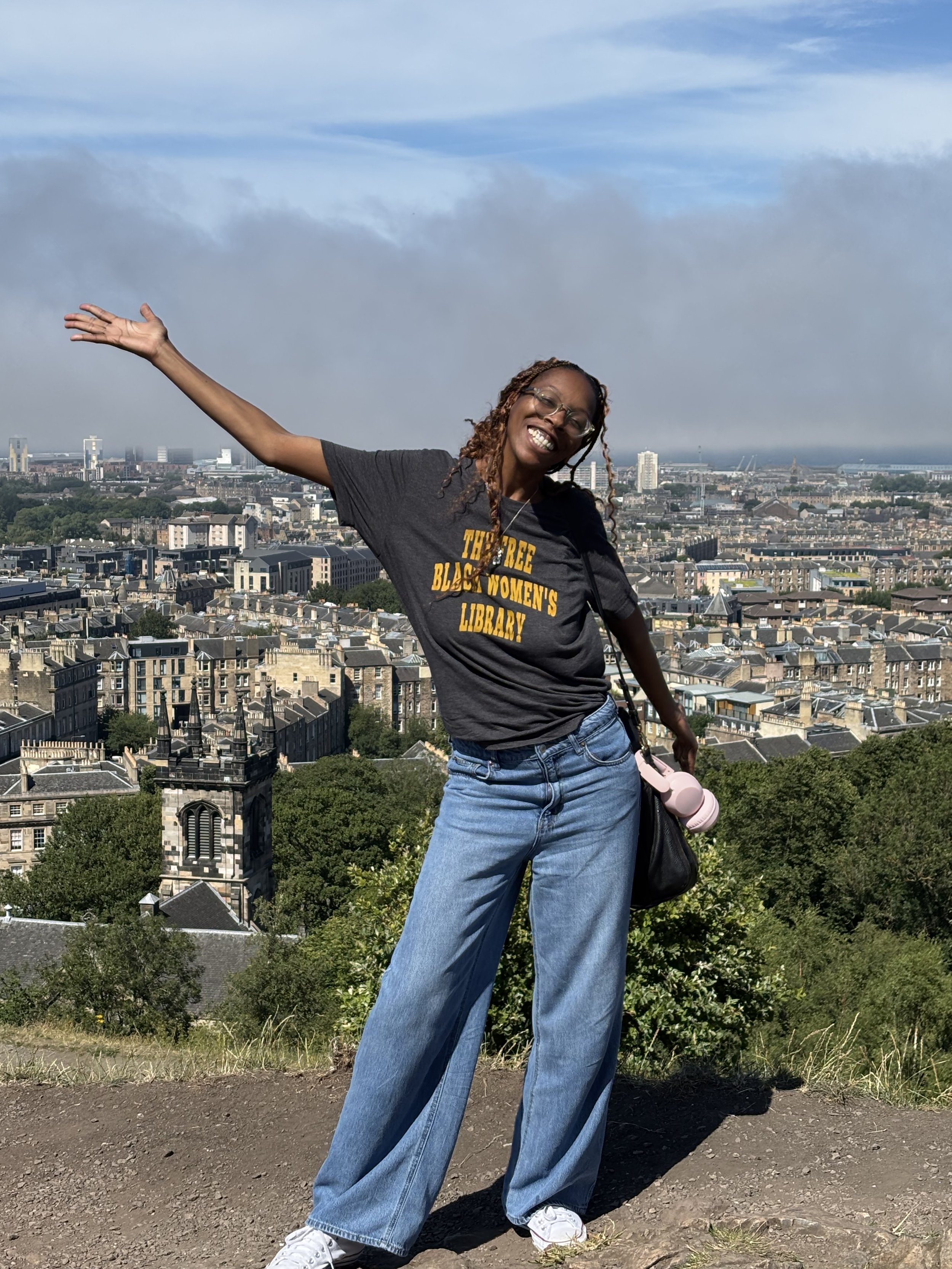
Photo Credit: My classmate, Bia, on my phone! Edinburgh, Scotland
The MFA (Master of Fine Arts) is one of the most highly debated degrees. Do you really need it to be a successful writer? The definitive answer is no. You don’t.
I’ve been telling writers for years that you don’t need an MFA to be successful—and now, in the second year of my MFA, I still maintain the same opinion. It’s not necessary to be a great writer, but it has definitely helped me in ways that going to workshops and literary events sporadically on my own didn’t quite match.
It’s also important to keep in mind that everyone’s goals are different. Everyone’s journey will be different. You have to block out the noise of opinions and learn what works for you.
My Graduate School Journey
After undergrad, it would be an understatement to say I was burnt out from school. Unlike many of my classmates, I chose to work for a while instead of going straight into grad school.
The prospect of a Master’s degree seemed daunting, and I still wasn’t sure what my path would be. After college, I interned for literary nonprofits, literary agencies, and scouts for about two years. I had an inkling that I wanted to work in publishing and thought for sure this would be an excellent way to get my book published.
Every young writer probably has this idea at some point—so let me tell you right now, that’s not how it works. It can work that way over a very long period of time, but there will be a lot of unpaid internships, low-paying jobs, and microaggressions along the way. Just be prepared for that.
One job that really put the MFA in perspective was my Social Media and Marketing Assistant position at Poets & Writers Magazine. There, I worked with people pursuing MFAs and was exposed to a world of writers who either had this degree or were trying to get it.
That’s when I realized that, as a writer, the MFA could open the door to opportunities I never thought possible. It’s something you do not just to become a technically better writer—although that will probably happen too—but to leverage your network and gain exposure to (possibly paid) opportunities in the literary arts.
Exposure?! You’re Kidding, Right?
I know, I know—exposure doesn’t pay bills. But neither does any degree that you earn and do nothing with. I had to clear my vision for my career and my life before I proceeded with the next steps in my educational journey. In 2017, I decided to go back to school for my Master’s degree. Guess what I was studying? Nonprofit Management. At the time, I was deep in the nonprofit world. Even though I found it exhausting, I couldn’t see another path forward as a person who wanted to give back to the world with my voice.
In my first semester at Baruch, I was reminded of why I absolutely loathe Econ—and why I was hopelessly in love with writing. While I was barely making it through Economics, I proved to be a powerhouse in my American Policy class, which consisted of long conversations and essays about politics and government. I did a presentation on recidivism in the prison population and was so proud of myself afterward. For a young woman who was often labeled shy growing up, it felt great to speak in front of my class—even going off the cuff a bit and eliciting a few laughs. Little did I know I would one day be a speaker. We wrote essay after essay in that class. My final essay, which was an in-class exam, snagged the highest score in the class.
On the back of the test, the professor said:
“The world needs more voices like yours. Write as much as humanly possible.”
I took him literally. By the next year, I had dropped out of my Master’s program and incorporated my business, Spoken Black Girl.
Becoming a Writer, Mother, and Founder
Even though I was now officially an entrepreneur, I still worked contracts—so when the job market slowed down in recent years, I definitely felt it. Becoming a mom in 2019 and again in 2023 took me off course from my single-minded career track, while asking that I dig deeper into my business, which was often my only lifeline in tough times. Going through those uncertain times solidified the pillars of who I am as a writer: someone who is determined to flourish without burnout, centering self-care, and prioritizing mental health.
As an often overwhelmed stay-at-home mom, it became absolutely essential that I figure this all out. And since writing is how I heal, I kept writing and publishing, resulting in the publication of Departure Story: a novel (2021), Issue 5: Motherhood (2024), dozens of poems, blogs, and journal entries that ranged from the deepest despair to pages and pages of affirmations on end—building myself up word by word.
In these past years, I’ve found clarity in my purpose—guiding Black women writers to heal and release through their stories—and I’ve gotten to know myself better than ever before. My ADHD diagnosis in 2024 opened the door to so many insights about the way I learn and what I really need to succeed.
Why I Chose the MFA
At this point, I was faced with needing more qualifications to compete in the job market (aka a Master’s degree).
This time, I decided to go for my MFA.
As a newly diagnosed ADHDer, I learned it was okay to have an area of hyperfocus and to lean into it—rather than listening to people who don’t have to live your life, chart your career, or do the work to get the degree. I knew that I could attain an MFA in Creative Writing because I love writing. I knew I needed a program that wouldn’t take me away from my family too much—something I could do remotely (I ran into that snag after getting accepted to another program with less flexibility)—and affordable (relatively speaking). That’s how I made my choice to attend Arcadia University. This program has its pros and cons, so make sure you research thoroughly before applying, but overall it has been a positive experience, and one that works for me.
It also doesn’t hurt that my MFA includes a residency in Edinburgh! That’s where I’m off to now—I’ll update you all on how it goes.
What I’m Learning
I’m part of a small cohort, but we know each other's work well. And because it’s a Master’s program, there’s a level of dedication and effort put into our critiques that you can’t typically get unless you’re working with editors. We are champions of each other’s work, and it means something to us.
The MFA is a terminal degree in teaching Creative Writing. Are you interested in teaching Creative Writing? Then an MFA may be for you.
I certainly intend to use the knowledge I’m gaining about craft and storytelling to educate my community of Black women writers.
I’ve already started my journey as a writing and publishing coach, which has given me so much insight into how I would design a program for creative writing, what I would teach, and how I would support my students and clients.
Final Thoughts
I appreciate everyone who has supported me and cheered me on in my writing journey. It’s truly the readers and dear friends I have that make this journey worthwhile.