September Book Club Pick: 5 Quotes from Sisters of the Yam by bell hooks
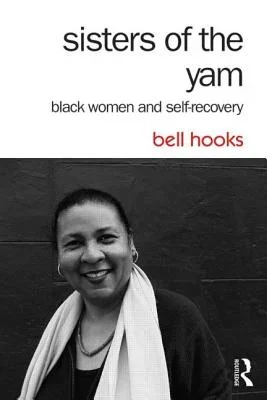
It’s September, which is the perfect time to delve into a book by bell hooks. The Black feminist literary legend was born on September 25th. If you’re a fan of Black feminist literature and you haven’t read Sister of the Yam, what are you waiting for? You can join the Spoken Black Girl Community and read in community! This book is the perfect community read. In the Preface, bell hooks reminisces on her experience teaching The Salt Eaters by Toni Cade Bambara to Black women students on the university level and the way that reading this novel, which discusses the mental anguish, depression and suicidal ideation that many Black women and girls endure, caused her students to come to her and confess their own struggles. She then formed a support group on campus for the women to speak about their experiences, which she called “Sisters of the Yam” after the main character of The Salt Eaters, Velma, who starts the novel in a place of deep despair and maps her way to healing. This story arc is one that is often seen in Black women’s literature. We are known to write and create our own roadmaps to self-actualization in a world that often wants us to think less of ourselves. This not so subtle brainwashing convinces us that we are only worth what we can do for others and that our own bodies and minds are not worthy of the same replenishment. Long before I started searching for mental health resources on the internet around 2013, bell hooks had already eloquently addressed this pervasive issue in the Black community.

“Often when I tell black folks that I believe the realm of mental health, of psychic well-being, is an important arena for black liberation struggle, they reject the idea that any "therapy"-be it in a self-help program or a professional therapeutic setting-could be a location for political praxis. This should be no surprise. Traditional therapy, mainstream psychoanalytical practices, often do not consider "race" an important issue, and as a result do not adequately address the mental-health dilemmas of black people. Yet these dilemmas are very real. They persist in our daily life and they undermine our capacity to live fully and joyously.”
“In a revolutionary manner, black women have utilized mass media (writing, film, video, art, etc.) to offer radically different images of ourselves. These actions have been an intervention. We have also dared to move out of our "place" (that is away from the bottom of everything, the place this society often suggests we should reside). Moving ourselves from manipulatable objects to self-empowered subjects, black women have by necessity threatened the status quo.”
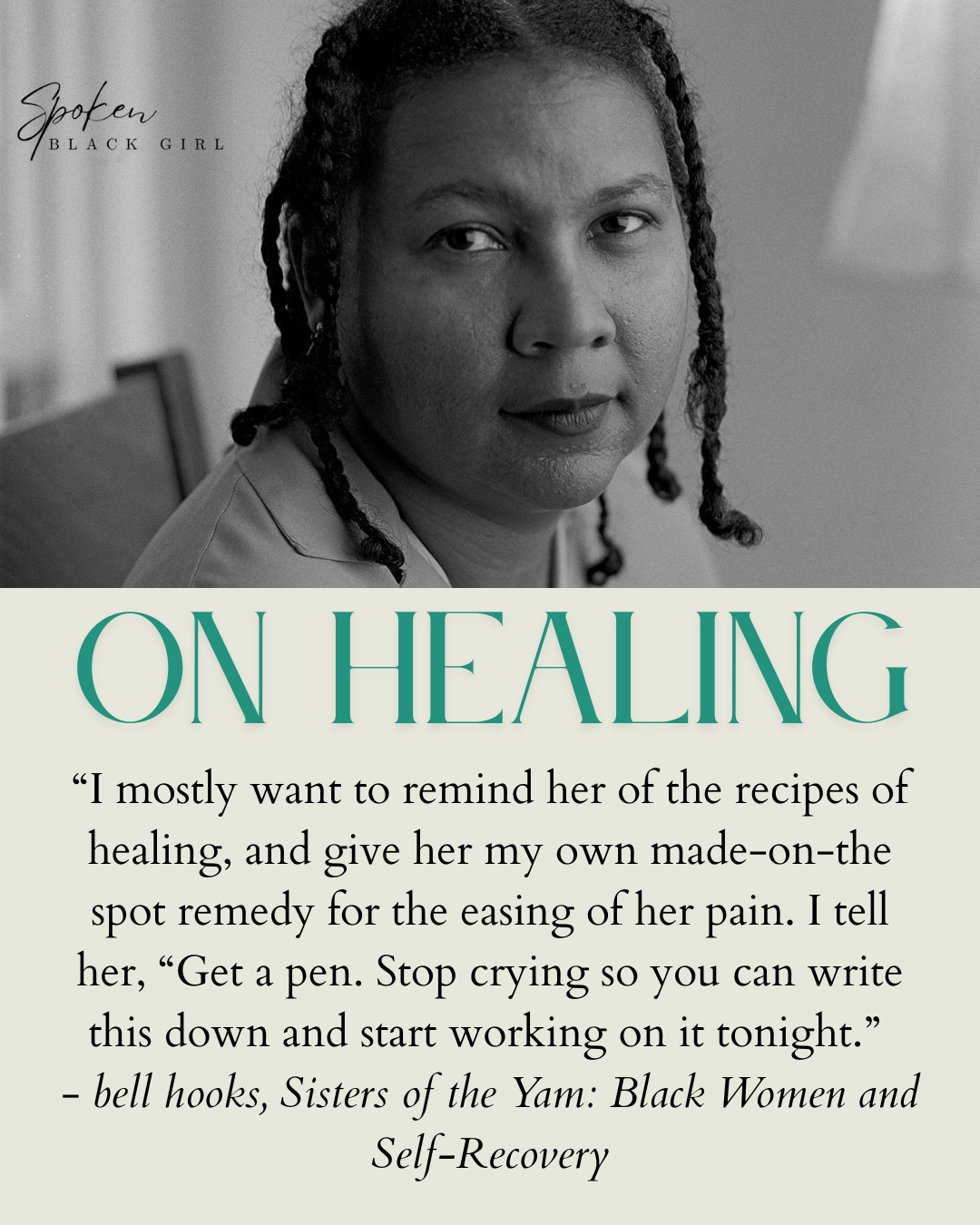
“I mostly want to remind her of the recipes of healing, and give her my own made-on-the spot remedy for the easing of her pain. I tell her, “Get a pen. Stop crying so you can write this down and start working on it tonight.”
“No level of individual self-actualization alone can sustain the marginalized and oppressed. We must be linked to collective struggle, to communities of resistance that move us outward, into the world.”
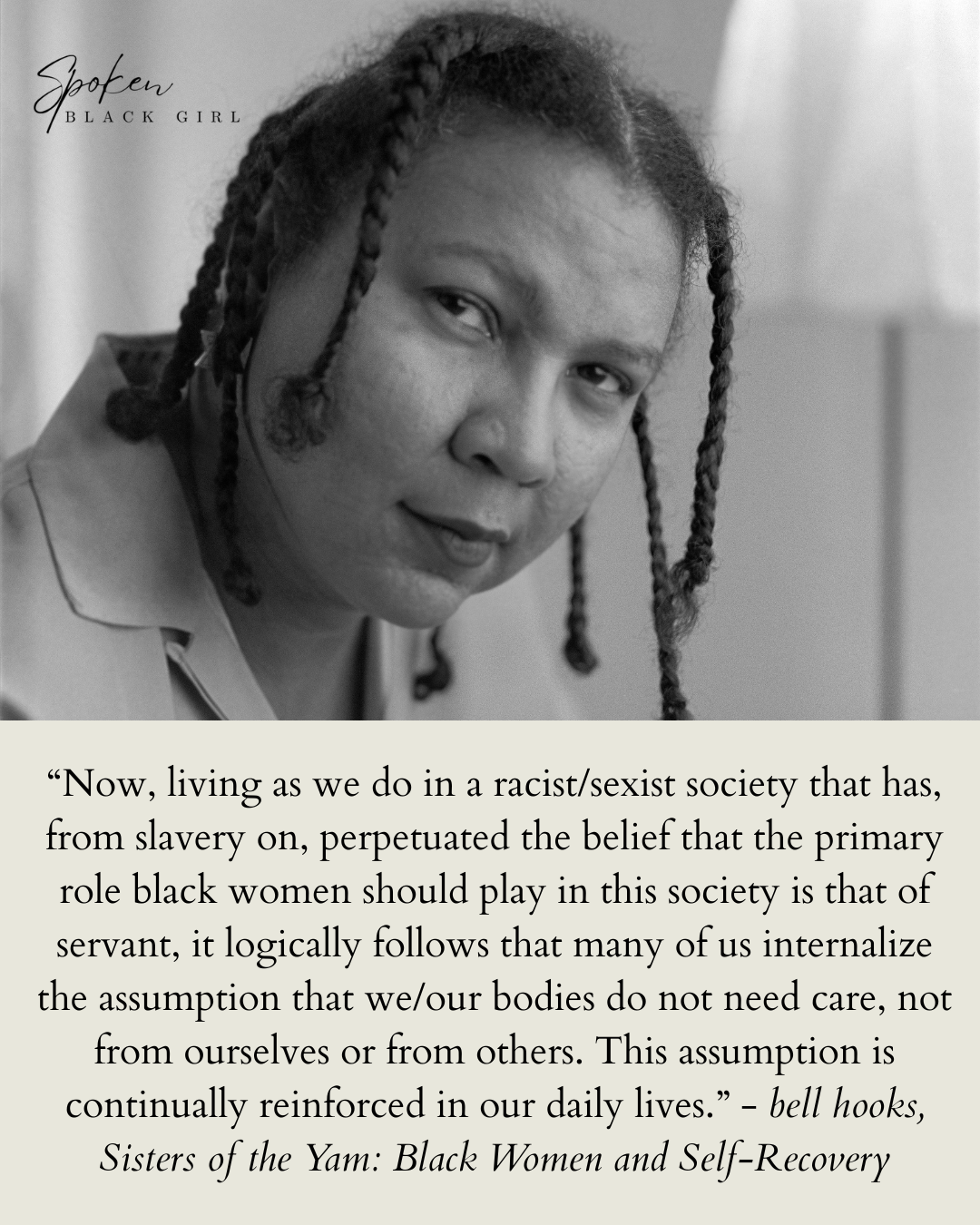
“Now, living as we do in a racist/sexist society that has, from slavery on, perpetuated the belief that the primary role black women should play in this society is that of servant, it logically follows that many of us internalize the assumption that we/our bodies do not need care, not from ourselves or from others. This assumption is continually reinforced in our daily lives.”