Photo courtesy of Muses & Melanin
We had the pleasure of speaking with writer, editor & experienced publishing professional, Lyzette Wazner. The author of TRAUMA, TRESSES, & TRUTH: Untangling Our Hair Through Personal Narratives has been published in over 30 literary journals, magazines, books & newspapers. She is the founder of Muses & Melanin, a professional-development fellowship program for creative writers of color.
What was the moment or experience that led you to create Muses & Melanin?
Photo courtesy of Muses & Melanin
The Muses & Melanin Fellowship for Creative Writers of Color extends the work I began during the 2020 Summer of Racial Reckoning in the wake of the Breonna Taylor and George Floyd assassinations. As a way to metabolize the persistent, invasive rage I felt at that time, I designed a six-week Professional Development for Writers of Color workshop that I taught through several literary organizations. (Incidentally, that was the same season in which I sold my book, TRAUMA, TRESSES, & TRUTH: Untangling Our Hair through Personal Narratives, to Chicago Review Press). Those workshops became popular, and I formulated them for aspiring BIPOC writers as empowering, vital courses addressing the practical concerns of developing a literary career. The resources, approaches, skills, and practices I shared in these classes were specifically geared for us. In the publishing industry, BIPOC writers do indeed have differentiated concerns.
I realized that the lack of diversity gatekeepers at publishing houses and presses bore a direct impact on how the industry receives, reviews, and deliberates BIPOC writers’ submissions, be they books or individual pieces. But addressing business and marketing skills remains taboo in most MFA and BFA Creative Writing curricula. Graduates leave these programs with a solid grounding in craft, critical theory, literature analysis, close reading, and they develop their critiquing chops. There’s rarely any, or sufficient, direction about how to go about establishing a sustainable author career within an industry where, in the 21st century, talent alone is inadequate for success.
I founded Muses & Melanin to stand in this gap, to address that “Now what?” crossroads.
Muses & Melanin specifically serves talented emerging writers of color who may not yet have extensive publishing credits, agent representation, or other traditional markers of literary success. Why was it important to create a program for writers at this particular stage of their careers?
Emerging writers with evidence of talent, promise, and with drive are at the optimal stage to benefit from Muses & Melanin. We want writers to come to us hungry, eager to learn and lean into a demanding curriculum, with the maturity to apply a focused, dedicated mindset throughout the practicum. This Fellowship is not suitable for weekend warriors, hobbyists, or absolute beginners. Our admissions application is quite thorough, requiring writing samples, references, a writer resume, a bio, and several short-answer responses. We require applicants to have a minimum of two publication credits under their belt, a bachelor’s degree, and a minimum of five years of writing experience. An MFA is not required, nor is an undergraduate degree in Creative Writing or English. Applicants with an MFA in Creative Writing are eligible to apply. MFA graduates are often the applicants in our pool who are most poised to take advantage of the Fellowship.
Folks who have a doctoral degree in Literature, English, Creative Writing, or an ancillary field may not apply. Applicants who have published a book with a traditional press, have a book under contract, or have a literary agent are likewise ineligible. These people would be overqualified for this program. We also do not accept people who are full-time students in a degree program.
The Fellowship addresses the reality that much of the publishing industry remains overwhelmingly white. What barriers do you believe writers of color encounter that are often invisible to people outside the industry?
The reality is that publishing isn’t a business where you make it based solely on talent. If that were the case, then more writers of color would be receiving book contracts and paid higher advances.
Publishing is a business where you need to have resources. White people hold most of the resources in the publishing world. By resources, I mean insider knowledge, connections, and networks.
One of my largest pet peeves in the industry’s tendency to shelve our books based on what we look like or how our names sound. That’s the typical knee-jerk reaction. “This author’s name is Rodriguez? Let’s slant the marketing towards/shelve the book on the Latino Interest shelf. Lucille Zhang wrote this book? Throw it in Asian Studies. ” Despite the fact that the book may be most appropriate, and more appropriately found, on a bookstore’s Sci-Fi shelf, or in the Reference or Political Thought section.
Remember during that fraught 2020 summer and fall, when publishing houses’ websites were rife with statements of racial solidarity, promises to be open-minded when reading manuscripts with first or last names that sounded a certain way, commitment to take care to refrain from pigeon-holing submissions? Black Lives Matter and End Asian Hate on every landing page. Many BIPOC writers rode that wave, but we weren’t fooled. We knew that crest wouldn’t last.
Folks may not know that writers of color tend not to get paid the same advances as White authors—even when we write about the same subjects. Witness the Jeanne Cummins American Dirt debacle. I should add that White female authors tend not to get the same advances as their White male counterparts.
In spring 2025, Gitnux, a market research platform that collects data-driven insights across businesses, published a list of highlights concerning underrepresented voices in publishing. A few of their findings are:
Only 16% of publishing industry professionals identify as people of color.
The percentage of Black authors published in major publishing houses remains under 10%.
Fewer than 4% of books published in the United States are by authors of Native American descent.
The percentage of Latinx authors published is approximately 6%.
The number of published works by Muslim authors is less than 2% of total published books.
In a survey, 70% of underrepresented authors stated they faced biases during submission and publishing processes.
Approximately 30% of readers from diverse backgrounds feel that mainstream publishing does not reflect their experiences.
Bookstore shelf space dedicated to diverse authors remains below 10%, despite growing demand for inclusive stories.
85% of publishing executives agree that DEI initiatives can improve business performance, yet only 40% have fully implemented such initiatives.
I would encourage your viewers to read Lee & Low Books’ Diversity Baseline Survey, a survey they administer every four years. Their survey addresses multiple questions, among them:
“Has the publishing workforce actually become more inclusive?”
“Why does diversity in publishing matter?”
“Does the book industry have a diversity problem?”
I’m writing my second book, entitled Building a Career as a Literary Author of Color, and in it I have an entire chapter on this question you’ve asked. Beyond Gitnux and Lee & Low, I cite PEN America, The New York Times, and The Atlantic, among many others.
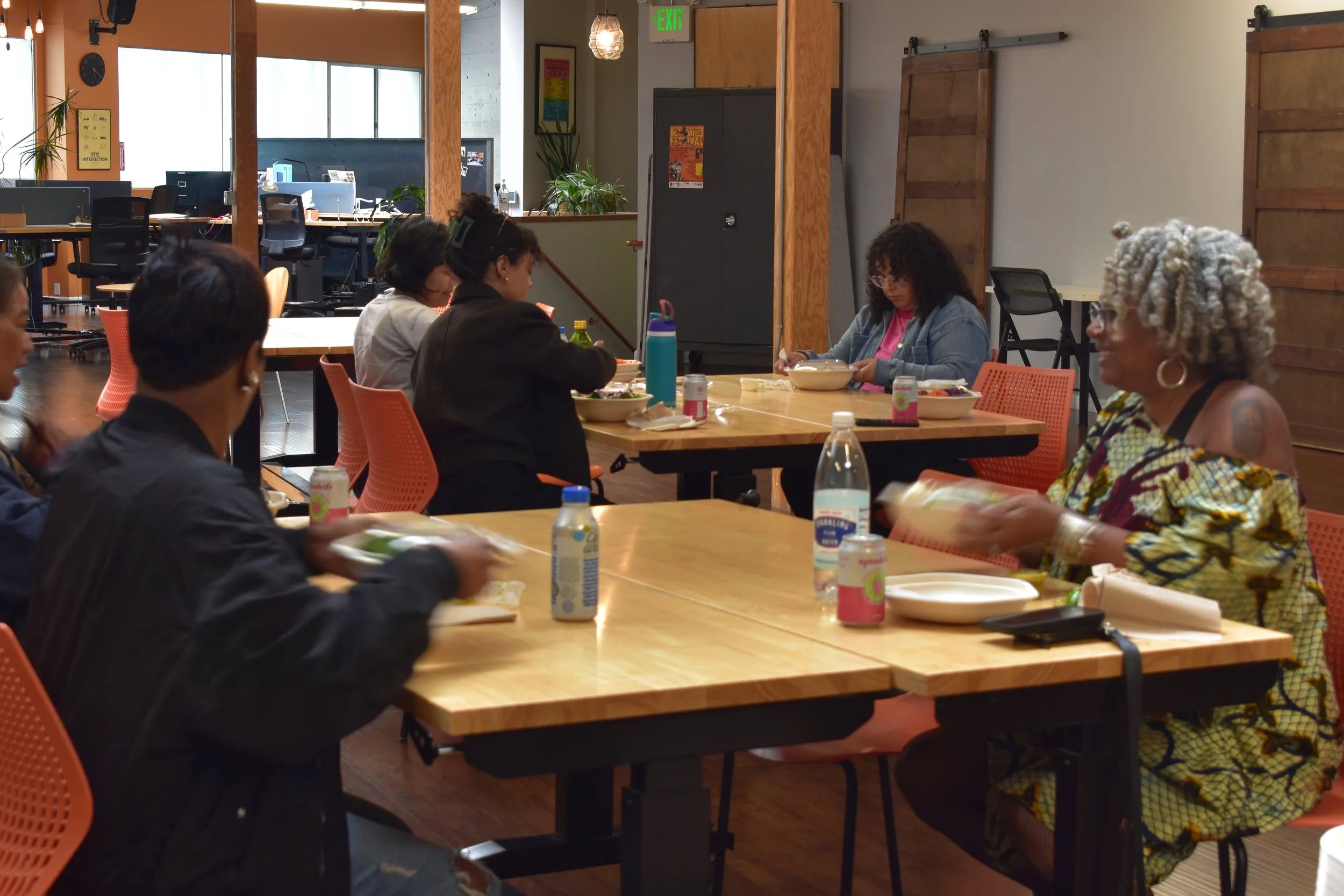
Photo courtesy of Muses & Melanin
Muses & Melanin helps Fellows submit their work to publications, contests, residencies, grants, and fellowships. How do you develop a plan for strategic submissions versus submitting everywhere?
I do not advise shotgunning your work hither and yon, in the hopes that something will land. In M&M, Fellows submit work in the Fall to at least20 literary journals and contests. A few also elect to submit to conferences and an artist residency. Your readers may be interested in my article that appears in the current issue of Poets & Writers Magazine, “Strategic Submissions: Best Practices for Your Pursuit of Writing Opportunities."
In M&M, we discuss much more than how to locate legitimate markets. In the Fellowship, “market” means any opportunity to which writers can submit: literary journals, magazines, newspapers, artist residencies, grants, fellowships, and conferences. We cover these markets in detail and learn due diligence: how to prepare professionally formatted submissions, cover letters, and literary resumes, and how to project a professional demeanor, practice, and attitude that will exude from and infuse these materials. Much of this part of the curriculum is learning what not to do and busting self-limiting myths such as “I can’t apply to an artist residency unless I’ve published a book,” or “I can’t submit a panel proposal to AWP unless I have an MFA.”
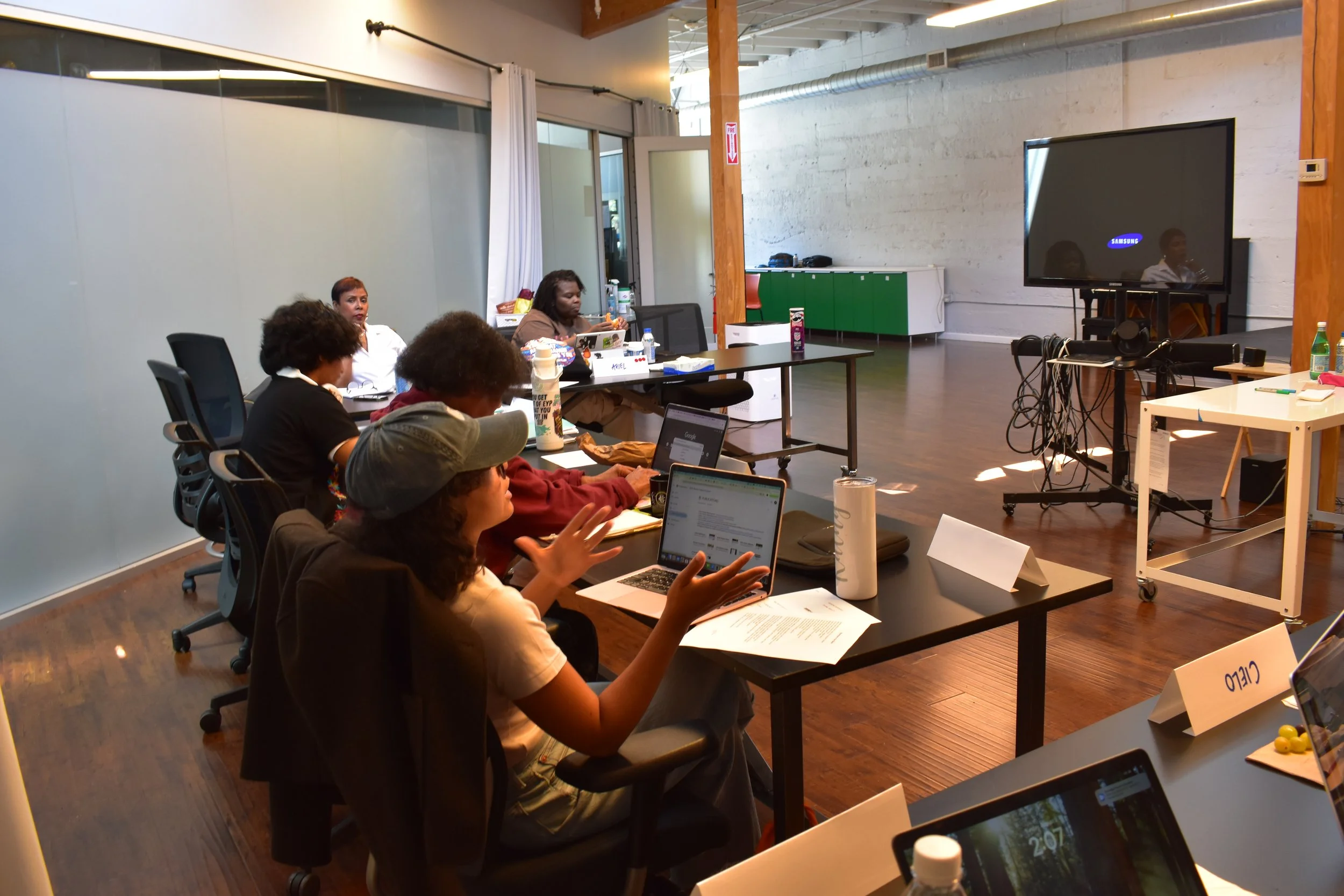
Photo courtesy of Muses & Melanin
Whichever opportunity you are submitting to, reading and adhering to instructions and details is paramount. If a contest’s word count is 3500, sending a 4000-word entry is likely to disqualify you. If a poetry journal’s page cap is five, the editors will not be pleased that you sent seven pages. If a funding application requests that you upload a 10-page writing sample, the committee will not be impressed that you uploaded 14 pages. Thus, Fellows learn how to parse a market’s application or submission requirements through a team-based “Read the Markets” quiz!
What transformations have you witnessed in the writers who participate?
It’s always exciting when a Fellow arrives to class with news of a story acceptance, contest win, or conference acceptance. I enjoy hearing from prior graduates who email me with good news even months after they’ve graduated. In each cohort thus far, at least four Fellows have a journal or newspaper publication offer before they’ve completed the program. Such developments are tangible proof to Fellows that this curriculum works, that they have talent, that they can raise the trajectory of their literary careers. But as Founder, the most significant transformations are in the Fellows themselves: increased confidence, confronting imposter syndrome, tapping their potential, pride in reading in front of a public audience at the Graduation Ceremony & Reception, and–a particular joy for me– the camaraderie and mutual encouragement that develops within each cohort.
One of the Fellowship's goals is helping writers develop "industry savvy." What does industry savvy mean to you, and why is it just as important as developing one's craft?
If you want to build a career as a professional author, it’s important to realize that just as much work needs to happen outside of the studio as within it. It’s also critical to understand that talent alone is not enough. In M&M, we lean into topics such as: What are the five major types of publishers? What are the pros and cons of each type? How do I make myself discoverable, as opposed to waiting/hoping to be discovered?
Fellows delve into understanding processes and perspectives from the other side of the desk: What are grant and fellowship reviewers seeking in an application? How do residency panelists deliberate project proposals? What are some faux pas that will keep journal editors from reading beyond your writing sample’s first page? What kinds of reviewers might be sitting on these vetting committees? And there’s so much more.
Fellow Testimonies
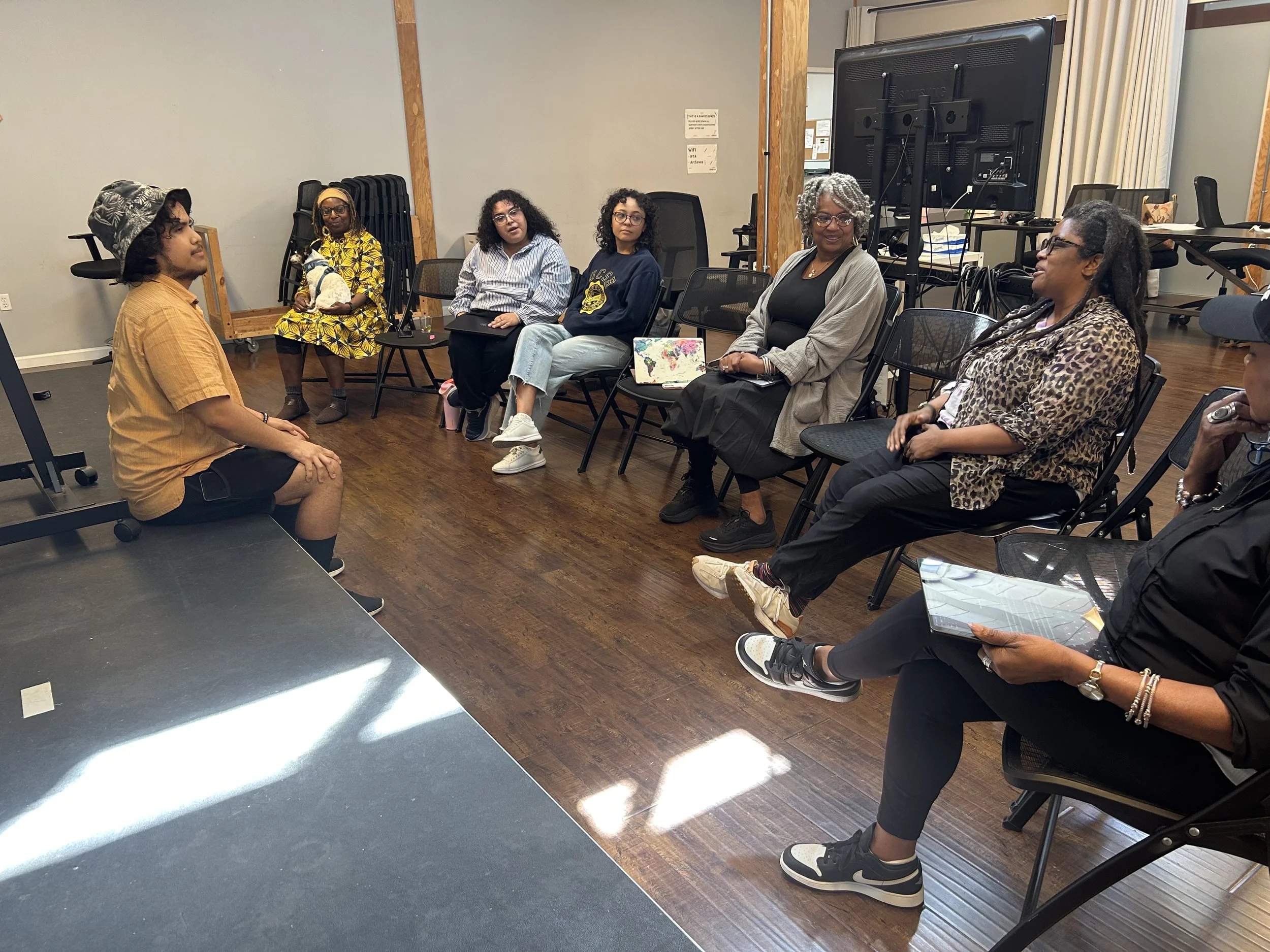
Photo courtesy of Muses & Melanin
Anonymous Fellow #1
Just got a Poets & Authors Fellowship for the Martha's Vineyard Institute of Creative Writing! Excited to spend my summer at Martha's Vineyard.
Thank you doesn’t begin to express my gratitude for how this program has poured into me and the others during the past two weekends. The sessions have revealed just how much I need to do to move from mediocrity to literary excellence. With the tools you’ve provided, I can compete with greater success to win grants, scholarships, and more. With heartfelt appreciation.
This program helped build my confidence and was immensely helpful in the progression of my literary career. The program did a good job of pushing us along. Even if I didn't feel ready, I had to take the steps which pushed me to recognize that there'll never be a perfect moment and it's better to just do it. I received three offers from journals to publish my essay.
Anonymous Fellow #2
What we were doing and learning is legitimate and works, as evidenced by the success of my cohort. Aspects of the program that were most helpful for my development:
1. Knowing about the different writing groups and how some of them were unions that offered benefits and health insurance.
2. All the different submissions software and how detailed Lyzette was when sharing the different conferences/fellowships/scholarships.
3. Practicing with our ears and how to read better. While I'm the only one from my cohort who hasn't found success, I have a new confidence that I'll get there by summer.
What I learned: Insights on what funders look for and how to position yourself well for a professional writing career (and that it’s not impossible!) Going through different types of applications and their processes, exploring conferences. Truly invaluable opportunity! Very grateful to have been part of this initial cohort and programs like this are so, so important to support!
Christl Perkins, Fellowship Alum
What would you say to a writer who has begun to question if there is a place for them in publishing?
I would say: You are not alone - many writers experience Imposter Syndrome. I have 2 pieces of advice: Overcome Imposter Syndrome- instead, believe that you are writing a story that no one else can/will write. Also, Join a community of writers, a supportive group of peers, in order to get and give encouragement and inspiration.