
Miss Cellophane: A Scorned Magnolia’s Manifesto
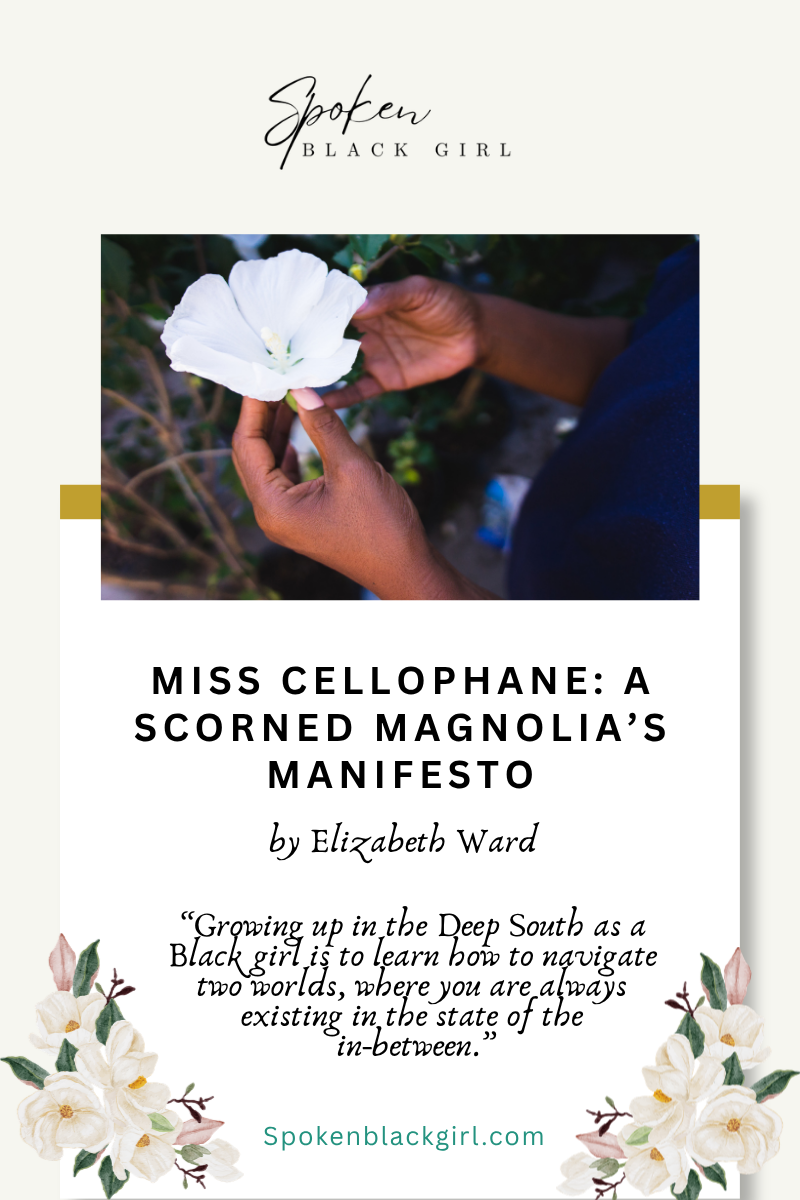
Growing up in the Deep South as a Black girl is to learn how to navigate two worlds, where you are always existing in the state of the in-between. Even in your youth, you are subjected to treatment that is adultifying yet still told to stay in “a child’s place.” This translates to your inner world, knowing the desires that exist within you, but having to function and speak the performative language of your outer world as a means of survival.
Young Southern Black girls raised in the church are groomed to conform to the “nice, good girl” model to gain respect from their peers, authority figures, and to become premier representatives of the race, a sentiment I empathize with. I grew up in a single-parent home; my mother served as a combination of nurturer, disciplinarian, and the only income supporting the household with two kids. Therefore, when it came to attempting to determine what my identity was as a young girl, I had no agency over it. My identity was formed for me, and I shrunk myself and functioned within the cage of the label in my young mind to not overburden her, even if it was to my detriment.
Church and school served as the main forms of community outside of my family unit, and with the school I attended being private, the same teachings and ideologies steeped in purity culture from church often resounded within an echo chamber aimed at the girls, telling us how important it is to not just be nice girls, but “godly nice girls”, who weren’t disobedient, walked the straight and narrow, and most of all stayed “pure,” by saving themselves for marriage. These teachings have traversed generations within the Black community. The message it relays to young Black girls is that the labor to preserve themselves is theirs and not the adults who surround them. They are worth nothing more than what meets the eye, and the labor they put forth must uphold the ‘pristine’ image of the family unit.
As I began to develop into my early teen years, the urge to rattle the cage of the label was persistent, especially after I realized how small my waist was, including that boys noticed it too. This personal discovery did not sit well with my mother, and after staging an intervention with my pastor at the time and his wife, I was shamed back into the ‘nice godly girl’ cage. Where I once felt empowered enough to express myself, even when my soul was in pain, I turned inward and found solace within writing as my means of safe and unaltered expression.
Poetry served as the avenue for me to give a name to the multitude of emotions running through my psyche. My innermost thoughts and dreams of being able to break free from the caged label of the ‘nice godly girl’ existed amongst the pages of my multitude of journals. Upon looking back at them, now that I’m older and am in active therapy, I hold a lot of grief for my adolescent and teenage self, often spiritually bypassing emotional pain that should’ve been named, addressed, and felt, not suppressed in the name of the Lord and preserving an image that wasn’t made in my likeness.
As I am now feeling those suppressed emotions in the process of re-parenting my inner child, I find myself often reflecting on my adolescence. I find that fatherless daughters aren’t often enabled to exhibit their symptoms of pain out loud, and should they attempt to try, they are immediately disciplined and forced to be silent. Left to tend to their bleeding wounds by their lonesome, and yet still are expected to achieve with no complaints, a reality I so deeply resonate with.
I wrote this manifesto in what is deemed to be witching hours, when, after an intense therapy session the day before, the rose-colored glasses I saw my childhood to young womanhood through shattered. The shattering of these glasses then shattered the foundation of my identity, as the one thing I rooted it in, a manufactured faith and label, dissipated. My manifesto, I lovingly titled “A Scorned Magnolia’s Manifesto” reads as follows:
The good church girl never wins, but is pruned to become a victim to this world, her community, and the church. She sits idly by humming and swaying, waiting for the Man in the sky to release a reward, a celestial sign that her denial of self isn’t in vain. The reward never comes, and her denial of self comes at a deadly cost.
The cost of heartache, burnout, emotional abuse, and isolation: being given the responsibility of carrying her burdens and the emotional burdens of others, stacked on her like a mountain of cement blocks too heavy to bear.
Drowning in self-doubt, doubled over in agony, trying to gain a sense of her existence through her suffocating soul cries. Retreating into her shell to cope alone.
She is taught that what she’s looking for is outside of her, causing her lively soul within to starve. Her functioning in survival mode is mislabeled as drive, ambition, “the one we don’t have to worry about” — her spirit, her being, is never tended to.
Her voice becomes quiet, meek, a shell of itself. Keeping the peace at her soul’s expense. Repeating the same script she’s been pruned to memorize, gaslighting herself with scripture, despite her soul bleeding out.
“This is what you were made for.”
“Your purpose as a woman is to serve.”
“Your suffering isn’t in vain but divine; a reward waits for you in Heaven.”
Somehow, her pain is translated into ungratefulness, discontentment, and even sinfulness.
So, her spirit and understanding of her own autonomy weaken; she is left finding little value within her being but mostly in her performance. When she performs and achieves, she is seen; her garden is refreshed for just a little while the sun shines on her.
The desire to have someone pour into her for a moment without having to achieve increases. In her weariness, convincing herself that her concerns are superficial and selfish, the Man in the sky remains on His throne; there’s no need for her tears.
Guilt and shame permeate her foundation of self, ultimately imploding into flames, pieces of her being shattered while others disintegrate in the robust flames.
So, in the rubble, she again assumes her position, sitting idly by, humming and swaying, waiting for the Man in the sky, wondering if He will show her how to put herself back together again. The Man in the sky says nothing, sitting idly by.
And yet, in a moment, a revelation settles over her being: to get up and no longer comply. The longer she sits, the more apt her soul is to die. A loss that is too damning.
So, I got up and ran. And within this journey, peace and true freedom have found me.
I’m resentful and angry about what the label of a good church girl has done to me.
Parts of me have been so suppressed that nothing but silence fills the void, while other parts whisper, and the rest have become so loud it’s rattled my soul to no longer comply, but to come alive. To no longer lie silent, muzzling parts of my being for a superficial sense of community, of connection, of autonomy and power.
Within all the programming I’ve been working to undo and unlearn, I’ve never felt so free. I burned it all down, and as I rebuild, it’s on my own terms and conditions.
This is my life, no one else’s. As Imani Perry (2022) wrote in her book South to America, “who I am belongs to me,” (p. 157) a short phrase that has impacted my soul. This renewed voice of mine is enchanting, assertive, and unrestrained. The woman I’ve yearned to be is finally manifesting, and as I get to know her, I fall more in love with her each day.
As Audre Lorde penned in the posthumous 2017 publication, Your Silence Will Not Protect You, “And the speaking will get easier and easier...And you will lose some friends and lovers, and realize you don't miss them. And new ones will find you and cherish you... And at last you'll know with surpassing certainty that only one thing is more frightening than speaking your truth. And that is not speaking."
To the part of me who once found solace and safety in the label of being a good church girl, I now deem you to be unshackled from me. You served your purpose of helping me survive; now I aim to live. It’s time for me to just be. To be me. To be free. To be.
To be and speak, speak freely.
No longer humming, sitting idly by.
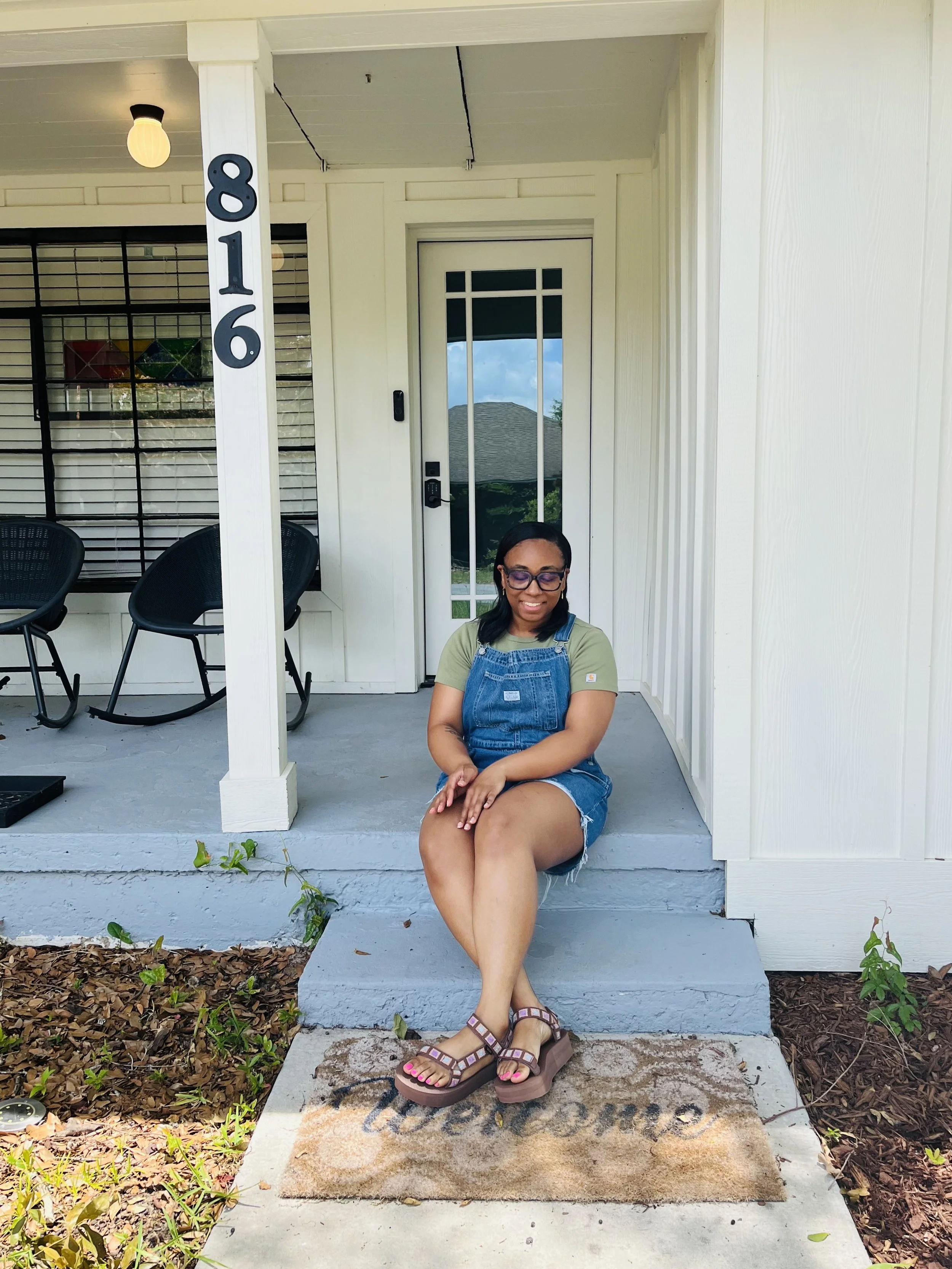
Elizabeth Ward
Elizabeth Ward is a Black Southern magnolia breaking tradition through storytelling, visual and written, by enshrining the voices of Black Southern women, enabling them to receive the respect and admiration they deserve.

Donate to Spoken Black Girl
Spoken Black Girl Publishing strives for equality and representation within the publishing and mental health and wellness industries by publishing the voices of Black women and women of color writers and providing affordable workshops, educational events, services, and empowering media to break the mental health stigma in communities of color while leveling the playing field in publishing. We believe that all voices deserve to be heard, and our team is dedicated to bringing quality and value to our audience.