PMDD (Pre-Menstrual Dysphoric Disorder): Linking the Chasm Between Women’s Hormonal and Mental Health
“The exact cause is unknown”
As I started my research about PMDD (Pre-Menstrual Dysphoric Disorder), I saw this phrase repeated again and again. We hear this refrain uttered over so many women’s health diagnoses. The truth is, the cause could be known, but our bodies and our health are not studied nearly as much as men’s health and bodies.
For so many women, our anatomy and our physiology are left shrouded in mystery. Our pain is dismissed and misunderstood. The moniker of “hormonal” is placed on us, and that’s code for anything goes, anything that can go wrong, will – she’s hysterical, therefore, she’s not to be believed. The way that women so acutely experience the connection of mind and body experience is sometimes used to undermine and humiliate us. Or maybe this is all in our heads. To be a woman in the world is to carry a myriad of concerns that are never addressed, that are body-shamed away, or simply fall on deaf ears.
From the time of our first menstrual cycle, a heavy weight of shame and responsibility cloaks us. Maybe it’s something we did. I remember being in the girls’ bathroom in middle school, talking to a friend about periods. Referring to her menstrual blood, she said, “I stink. And it hurts.” This is the first impression many girls have of natural bodily development. We’re told that we are entering womanhood, where we now face the dangers of attracting men (“don’t be a fast gal”) or worse yet, risk getting pregnant (“don’t be a baby mama”). So much is centered on how other people perceive us, but little is focused on the psychological and emotional toll that we pay as women. No one tells us that our inner world is about to change forever, and for many women, it’s a silent battle that we fight for our entire lives.
No matter how challenging our fight is, our struggle is belittled. We are told that it’s “normal”. We’re still expected to show up as usual to work or school. We’re still expected to support our families without question. We’re sometimes given medication — birth control and/or anti-depressants, so that we can “cope”, but there is rarely any hope or practical solution offered for our lasting and complete healing. We’re meant to grit and bear it with a smile, no matter how hard it gets. The shame of speaking our truth is sometimes so great that we bury it deep inside. But as we dream of a better world for our sisters and our daughters, it’s time to bring this truth to the light.
The Infamous PMS
Long before I understood PMS (Pre-Menstrual Syndrome), I had heard people jokingly say, “Oh, she must be PMSing,” whenever a woman was seemingly emotional, angry or upset. It was as if PMS was a flaw inherent to women. We could sometimes be unruly and disagreeable because of our biology. And often, this irritability was known to ruffle men’s feathers specifically. We’ve all seen the sarcastic refrain of “Women, am I right?” and everyone is supposed to know what that means – that we lack logic and reason, especially before and during our periods.
Rarely do we question the inner lives of women, many of whom are experiencing severe psychological distress, which is not just a trivial mood, but a life-threatening proposition when you think about the realities of depression-induced suicide and suicidal ideation. The hormonal changes caused by PMDD, a more severe variation of PMS on the spectrum, can cause a serotonin deficiency. Serotonin is a naturally occurring chemical in the brain and intestines that narrows blood vessels and can cause changes in mood as well as physical symptoms. Serotonin deficiency is often linked with depression, which is why many of the mood symptoms of PMS and PPMD can lead to depressive episodes. (John Hopkins Medicine).
Other symptoms of PMDD include anxiety, tension, feelings of being “keyed-up” or “on edge”. Symptoms include persistent anger or irritability or increased interpersonal conflicts, and decreased interest in usual activities (e.g., work, school, friends, and hobbies). Other women can experience subjective sense of difficulty in concentrating lethargy, fatigue, changes in appetite, hypersomnia or insomnia and a sense of being overwhelmed or out of control. Physical symptoms can include breast tenderness or swelling, headaches, joint or muscle pain, a sensation of bloating, or weight gain. (Premenstrual dysphoric disorder - statpearls - NCBI bookshelf)
To further discuss PMDD and how we can better manage it, I spoke with Dr. Wendy Goodall McDonald about PMDD and what we can do to combat the silent suffering.
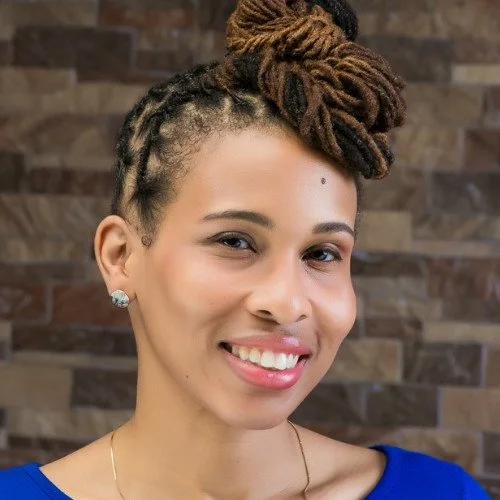
Q&A with Dr. Wendy Goodall McDonald
1) How can women and folks who menstruate distinguish between PMS and PMDD? Are there any red flags that indicate that you should seek professional help?
PMS is a combination of physical and mental symptoms that lead up to a period that can be uncomfortable or annoying. PMDD is when those symptoms start to interfere significantly with daily life.
2) PMDD is a condition that we often see trivialized. What do you do if your gynecologist dismisses your symptoms and you're unable to get a referral to a psychiatric professional?
Be very direct. Ask for what you want. If the doctor has other suggestions, for example, exercise or dietary changes, try those. But also schedule a follow-up to ensure that symptoms are either better. If they aren't, you can take the next steps.
3) What methods can you use at home to reduce symptoms of PMDD?
Exercise, yoga, meditation, increasing fruits and vegetables, and decreasing simple sugars.
4) What resources do you recommend to folks seeking help?
Therapy is definitely a resource. Psychology Today has a searchable database, as does Therapy for Black Girls. Your gynecologist may be able to help as well. For some women, birth control can help to reduce symptoms substantially.
From these findings, you can see that premenstrual symptoms exist on a spectrum, with about 90% of women experiencing some mild symptoms and that 3-to-8% of women, probably more, as this condition is under-diagnosed and often overlooked by medical practitioners. It’s important to start the dialogue and education about PMDD and PMS early on in a girl’s life because our brain chemistry could literally be impacted by these adverse hormonal effects for the rest of our menstruating lifetime.

Meet Alfie
Alfie is a woman who has been coping with PPMD for most of her life, and I talked about her experiences coping with PMDD.
“I started having my period when I was 11 and just remember severe cramps and debilitating periods that kept me home from school on some days. I have always had a ‘regular’ period and would start feeling PMS symptoms about 10 to 14 days before my period. It wasn't until my 40s that it got worse. Some days I woke up angry and feel like I want to kill someone. Again, because I had regular periods, in my head I thought this was severe PMS. This was before I knew about PMDD. I assumed it was hormones because that explains most issues most of the time. I didn't or don't really know anyone my age, in good health, who experienced the same severe mood swings and anger or crying fits, but after reading Suzanne Somers's book, “Ageless,” I knew I didn't have to live like that.”
One common story around PMDD is being mis- or under-diagnosed by doctors for years. Alfie experienced a similar path to finding answers about PMDD.
“I didn't seek Western medical attention for a few years, and it was a couple of years after self-learning that I may have PMDD before I went to a gynecologist. I had an extremely heavy period, more than I ever had in my entire life, and my functional medicine practitioner said it might be fibroids. That, in addition to the self-diagnosed PMDD, caused me to seek medical attention. My ultrasound came back normal, and I had a video appointment with my gynecologist during COVID-19. I literally broke down crying during the video call while trying to explain what I was feeling, and that gynecologist suggested I talk with a therapist and take anti-depressants. I was so angry! She wouldn't refer me to an endocrinologist or consider anything else. She kept referring to it as PMS rather than PMDD. And she wanted to prescribe me some anticoagulant they give women in labor to stop bleeding for my heavy periods. I had breast cancer at 43 and went organic; I don't take prescription meds or use chemicals at home. I’ve also been in therapy for years and have taken anti-depressants in the past but worked really hard not to take them any longer. So no, I was not taken seriously by a Western medicine doctor.”
There is an undeniable connection between hormonal health and mental health. Getting to know our bodies and our cycles can be a powerful tool against mental health misdiagnoses which are way too frequent, especially for women of color.
“PMDD makes me feel literally crazy at times. I was diagnosed with depression at 14 and continue to work hard just to feel whatever normal people feel at their baseline. Before I knew it was PMDD, I thought my depression was coming back or maybe I had some other mental health issue like bipolar or borderline personality.”
The more we are able to know ourselves and our bodies, the more hope there is for a future where women and girls no longer have to suffer in silence or blame ourselves for the mental and physical pain we may experience. The pain has been normalized by a society that still has a long way to go in the field of women’s health.
Alfie said it best, “I would like other women of any age to know that they're not ‘crazy’ and they’re not alone. Also, they don't have to live like that. Imbalanced hormones play a huge part in women's lives from their first menstruation, and there are things we can do as early as our teenage years. If your gynecologist or Western medicine doctor isn’t listening to you, find another! Or find a functional medicine practitioner and educate yourself. We as women know our bodies and should listen to them.”