Beauty Lessons from The Bluest Eye by Toni Morrison
This fall, I started feeling the call to read The Bluest Eye again. While reading through the draft of my memoir, which is composed of essays that I’ve written since the conception of Spoken Black Girl, I found this post, “The Black Ugly Duckling,” inspired by my reading of The Bluest Eye. The Bluest Eye was one of the first books I read after college, when I sought to widen my knowledge of Black women writers on my own after searching for myself in a mostly white curriculum. Now, as I embark on the journey of publishing Spoken Black Girl Issue 6 Beauty, it seems like fate that Toni Morrison is trending again. The Bluest Eye taught me so much about beauty. As Black women, our relationship with beauty is complicated. For what’s considered a frivolous topic, it really is that deep for us. From colorism and texurism to the quality of our beauty products, to maintaining the right to wear our natural hair in professional settings, beauty has always been a layered subject. If you want to read more perspectives on beauty, I highly recommend that you pre-order Spoken Black Girl Issue 6 Beauty. This issue will be available for free to the public on Feb 2, but you’re definitely going to want a print edition to fully enjoy the photography and art!
Have you ever heard the story of The Black Ugly Duckling? Sure, you have. It’s that kid at school who used to get made fun of because their skin was too dark, their nose too wide, their hair too nappy, etc. It’s bad enough that they’re being called ugly, but what makes it worse is that it’s their Black features that make them targets. And what makes that even worse is that the abuse is coming from other Black kids, who, as if through osmosis, have developed a very specific idea of what is beautiful, what is good, and what is worthy of love. And it isn’t what they see when they look in the mirror.
Follow my reader-supported Substack to receive new posts and support my work.
So what do you think? Do you know the story of The Black Ugly Duckling? If you do, The Bluest Eye by Toni Morrison might seem like a very familiar tale to you. This novel is about Pecola Breedlove, Black girl who only ever wanted one thing — blue eyes. But in order to tell the story of Pecola, Toni Morrison goes much further and tells the story of the degradation, humiliation, and hardship that culminated in the heartbreaking life of a girl who thinks that she can only find acceptance with brilliant blue eyes. Because Pecola is the “Black Ugly Duckling” of her town, her very humanity, personhood, and childhood innocence is denied. Her soul is picked at until only scraps remain.
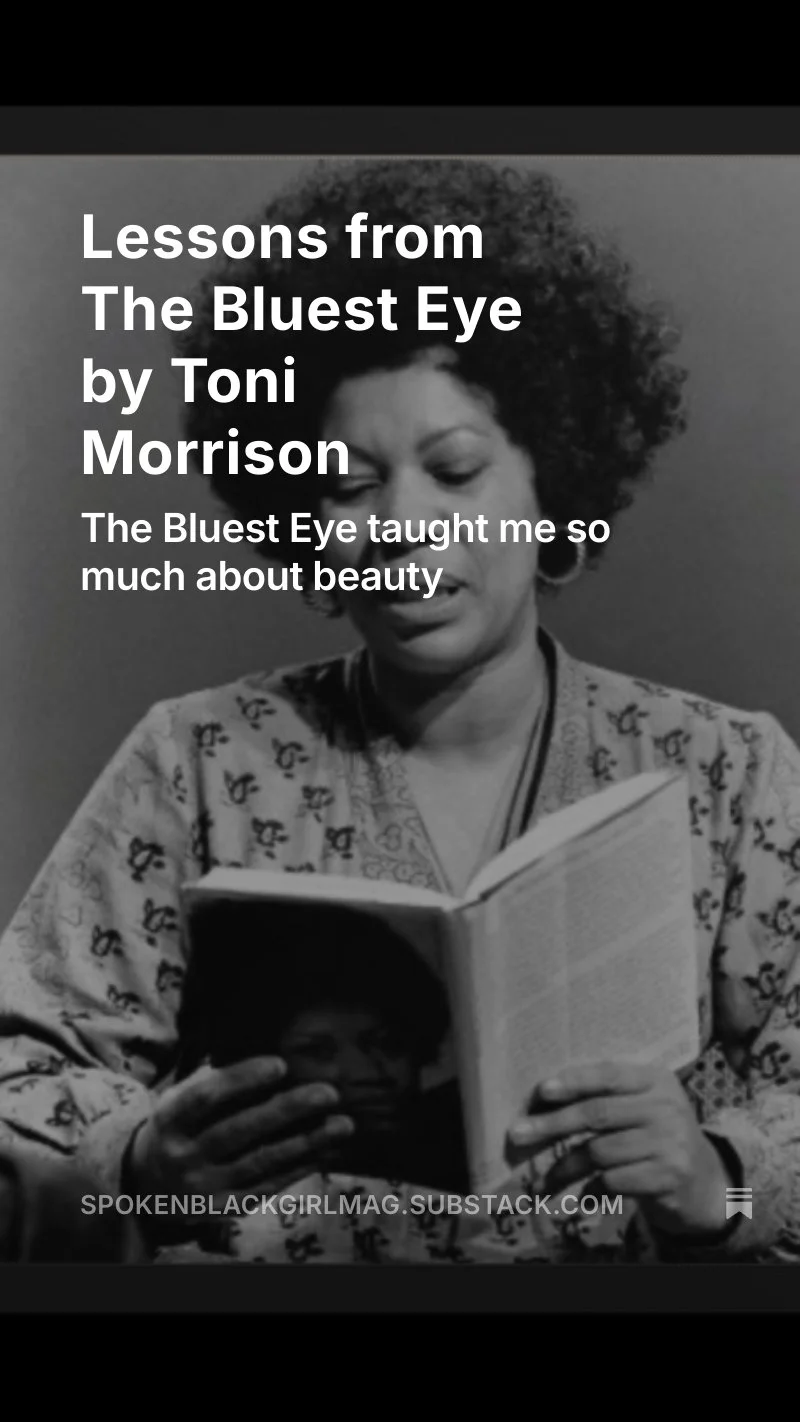
“All of our waste, which we dumped on her and which she absorbed. And all of our beauty, which was hers first and which she gave to us. All of us —all who knew her — felt so wholesome after we cleaned ourselves on her. We were so beautiful when we stood astride her ugliness... Even her waking dreams we used--to silence our own nightmares. And she let us, and thereby deserved our contempt. We honed our egos on her, padded our characters with her frailty, and yawned in the fantasy of our strength.”
In these lines, Morrison captures the multi-generational pain that is inherent in the souls of Black Americans. This is the pain that comes from being told that just by virtue of the color of your skin, you are less than. This pain is so deep that it becomes internalized, and even without the persistent voice of mainstream white culture to act as a guide, Black people were trained to look at each other and see everything that is ugly and worthy of shame and hate in our own reflections. Morrison writes about the schism between the well-to-do Black person and the uneducated or impoverished Black person, emphasizing the desperation of some to distinguish themselves from what they considered to be the riff-raff.
The pain and rage from daily injustices leave some folks searching for someone to blame. They find this scapegoat in the features, behaviors, and characteristics that mirror their own. It is this enduring generational trauma that makes us question our hair, skin color, or judge another Black person for the way that they talk — defining Blackness by comparing it to whiteness instead of looking within for validation and encouraging others to do the same. Today, I see this growing love for Blackness burgeoning in Black communities, but there is still work to be done.
As long as my niece wants blonde hair and blue eyes like Elsa from Frozen, and probably for longer, I’ll keep pushing for healing in the Black community. As long as having blue eyes means freedom from shame and struggle, this confusion will continue to exist. To have blue eyes in our society is to have self-determination and access to individuality, or conformity, or whatever path you choose, because blue eyes don’t narrow the list of possibilities in your life. I’m manifesting the day when Black kids love their hair without question and play in the summer sun with no fear of getting darker, celebrating their melanin in every tone and complexion.
If The Bluest Eye taught me anything, it is to reflect on the way that I view myself and ask how I define Blackness — through whose eyes?